
Gensler's Portable Office Needs Portable Power
A Gensler designer argues that the office should become a reusable kit of parts that moves from lease to lease. We agree, and we think power is the last fixed element standing in the way.
"Designing for disassembly becomes as important as designing for assembly."
Emily Segal, Interior Designer, Gensler London, September 2026
In "Built to Flex: The Case for the Portable Office", Emily Segal of Gensler London describes a shift in how office fit-outs should be thought about. Instead of a permanent installation that gets stripped out and skipped at the end of a lease, the fit-out becomes a kit of parts: furniture, partitions, lighting and finishes chosen so they can be disassembled, moved and reused in the next space. The payoffs she describes are lower waste, preserved embodied carbon, faster speed to market in a new building and a workplace that behaves like a product rather than a construction project.
It is a strong piece, and it never mentions power. That is not a criticism; it is the gap we live in. Read it with a facilities hat on and one question keeps surfacing: if the desks, walls and lights all leave with the tenant, what happens to the floor boxes, the hardwired benching and the outlet spacing that were designed around the old layout?
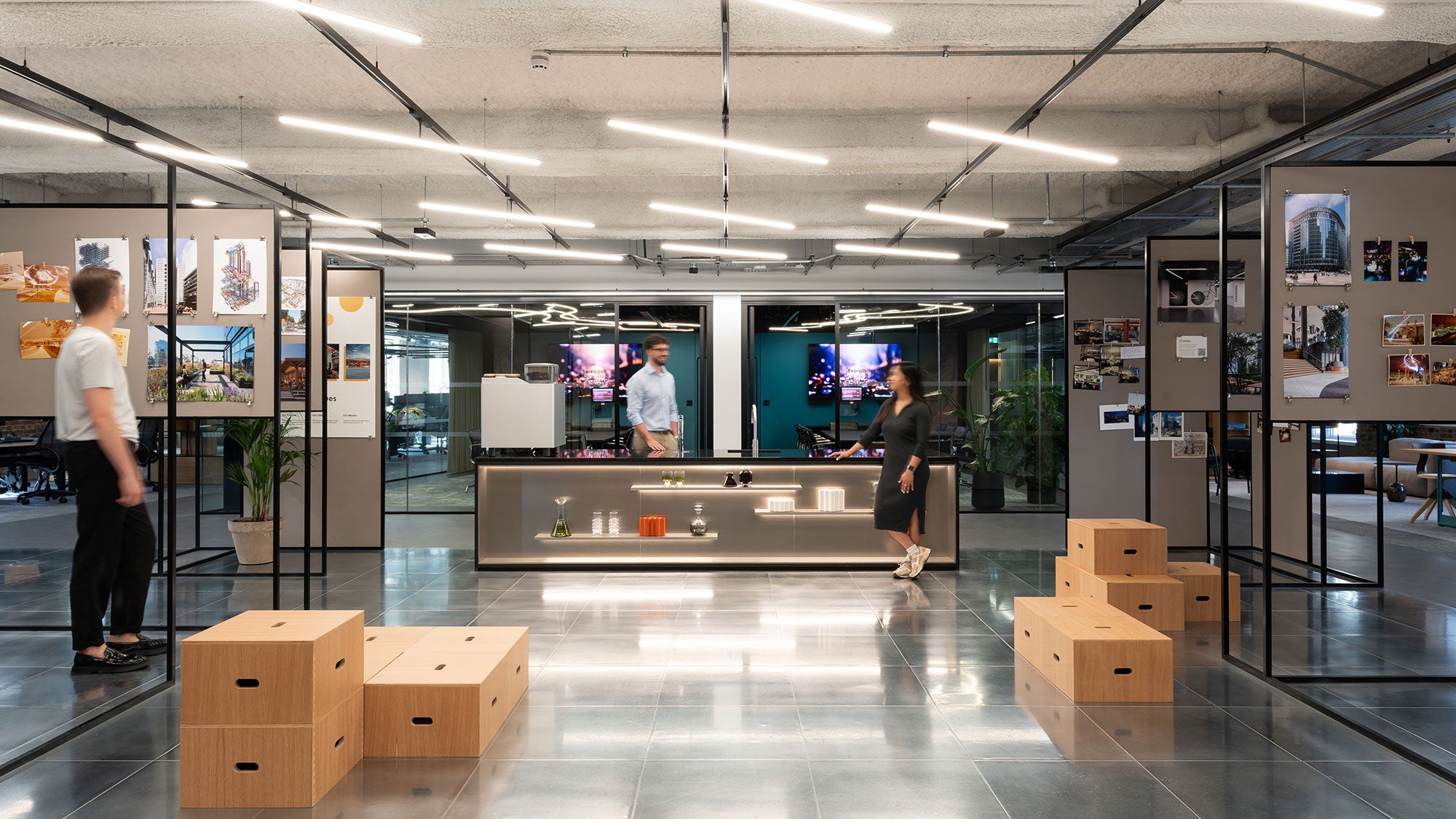
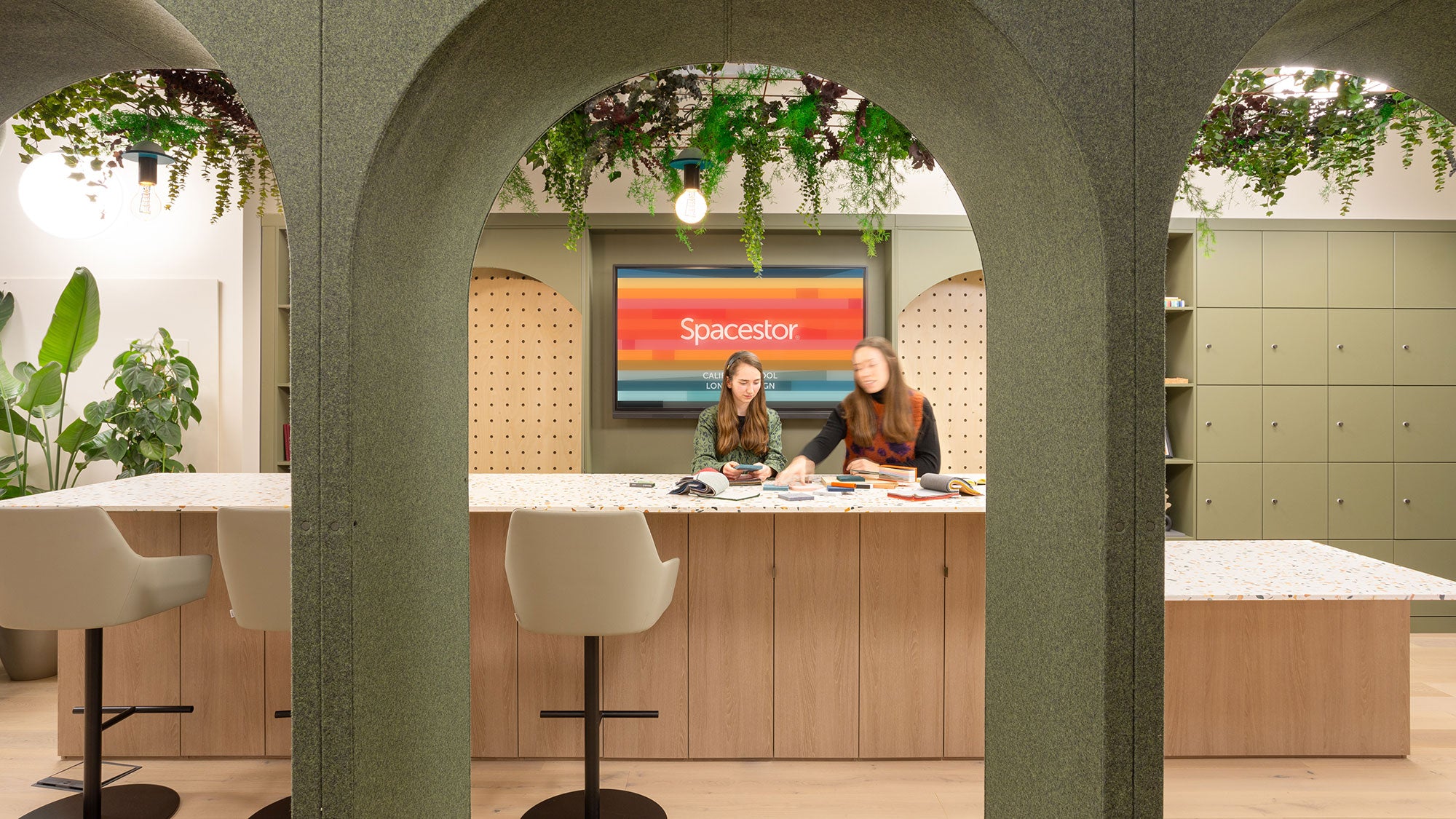
Power is the last thing bolted to the building
Every element in the portable office can be unplugged except the plugs. Electrical infrastructure is tied to the landlord's slab and core, it is expensive to change, and it quietly decides where furniture can go in the next lease just as it did in the last one. A truly portable fit-out needs a power layer that belongs to the tenant and moves with the kit.
That is what portable power stations are for. A Power Station lives with the furniture, not the building: it charges a bay of power banks that people take to whichever desk, booth or breakout table the layout has this month. Add a PowerBase and the same unit runs monitors, sit-stand desks and projectors from a table top. On moving day it goes in the same truck as the chairs.
Reuse, not just relocation
Segal's sustainability argument is about keeping materials in use across leases, and the same logic applies to power hardware. A power station bought for one office is redeployed in the next; the banks are swapped and recycled through our lithium-ion program rather than left in a wall. Our enterprise customers already treat the units this way: Argus Group moves them between hot desks, meeting rooms and floors, and JLL's Loft on Two rearranges an entire amenity floor around events without touching an outlet. Both stories are in our case studies.
If the portable office is where workplace design is heading, and we think Gensler is right that it is, portable power is not an accessory to that idea. It is the part that makes the rest of the kit free to move.
Gensler
Gensler
Gensler is a global architecture, design and planning firm. This article appeared on the Gensler blog and is quoted here with attribution; Gensler has not endorsed Omnicharge and is not a partner. We are sharing it because it makes the case for flexible workplaces better than most product literature does.
Quoted excerpts and images remain the property of their owners and are used with attribution.
Building a workplace that can move?
Talk to our team about power that packs up with the furniture: Power Stations, PowerBase and power banks for offices designed to relocate.
Contact Us